Eczema, Schmeczema

I have officially been diagnosed with eczema, and as I think back over my life, of course this crud has been eczema. Every stinking winter it bothers me. While I have other skin issues–potentially the you’ve-got-to-be-kidding-me-that’s-a-thing cholingeric urticaria–these little unpleasant bumps of itch and burn have been a part of me for a while.

They’ve also been a part of my kid’s life for forever. We call his Dragon Skin, a name that evokes strength and purpose. But frankly, this most important organ of his, those burning red winter hands, really bother me. I’m feeling like it’s not a great sign to have the skin look and feel that way. Which, when he was a wee one, I played around with ingredients to create his own ointment.

And now, rather than putting on pure shea butter out of laziness for myself, or looking for my kid’s old eczema creams, I have decided to play and make a new blend!

The inter-webs proclaim that colloidal oats are a gift from the Gods–and I remember the kid’s oat baths–so I looked into it. Why does it work? How do I make it? Can I make it?

Gift from the Gods

Healthline says that the fine powder of oats–which is what colloidal oats are (not to be confused with oat flour)–is made up of minerals, proteins, vitamins, fats and other power-packing nutrients that is valuable for skin. With antioxidant and anti-inflammatory properties, it’s not surprising that studies support the benefits of these oats, nor that the FDA approved colloidal oatmeal as a skin protectant in 2003.

In layman’s terms, it softens the skin, soothes the itch, and helps create a protective barrier to that which may trigger an eczema assault. I can think of other things that create a barrier, like coconut oil, honey, aloe vera, castor oil, and jojoba, which I know from previous usage is easily one of the best oils for the human skin. The internet says things like calendula (oh yeah, I remember that), lavender, chamomile and evening primrose are good for the skin. Wait, what? Isn’t evening primrose for peri-menopause, too? Sure thing.

I inadvertently created a scrub along with an ointment. Do not eat the mixtures, no matter how tempting.

To Make Colloidal Oats

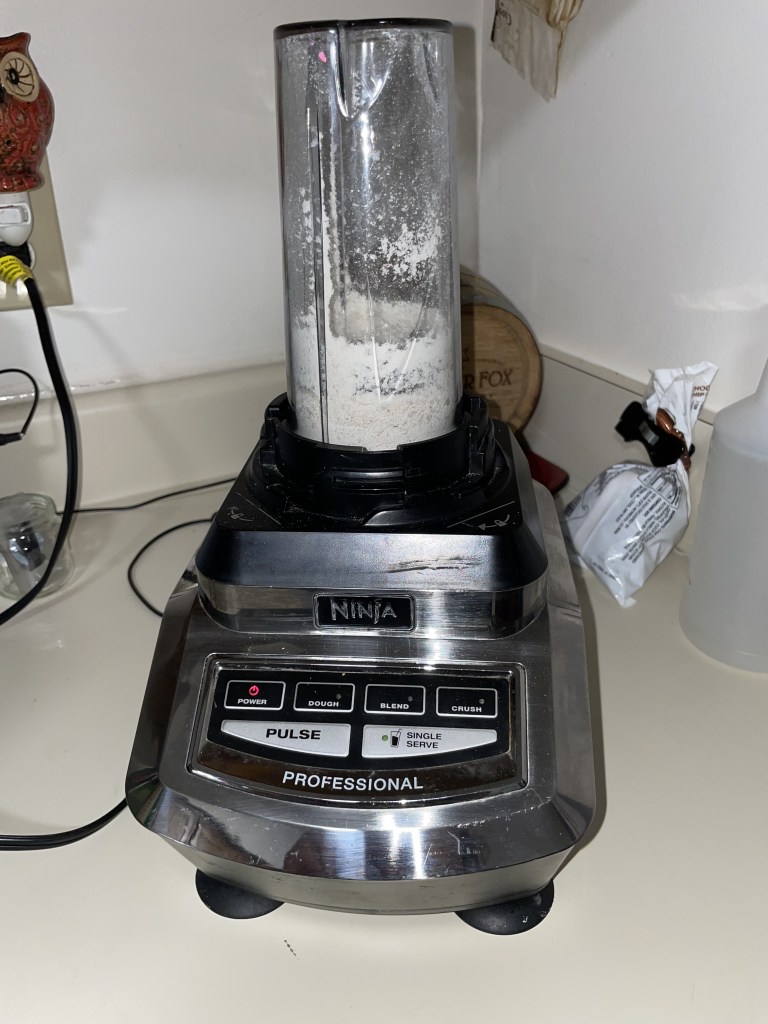
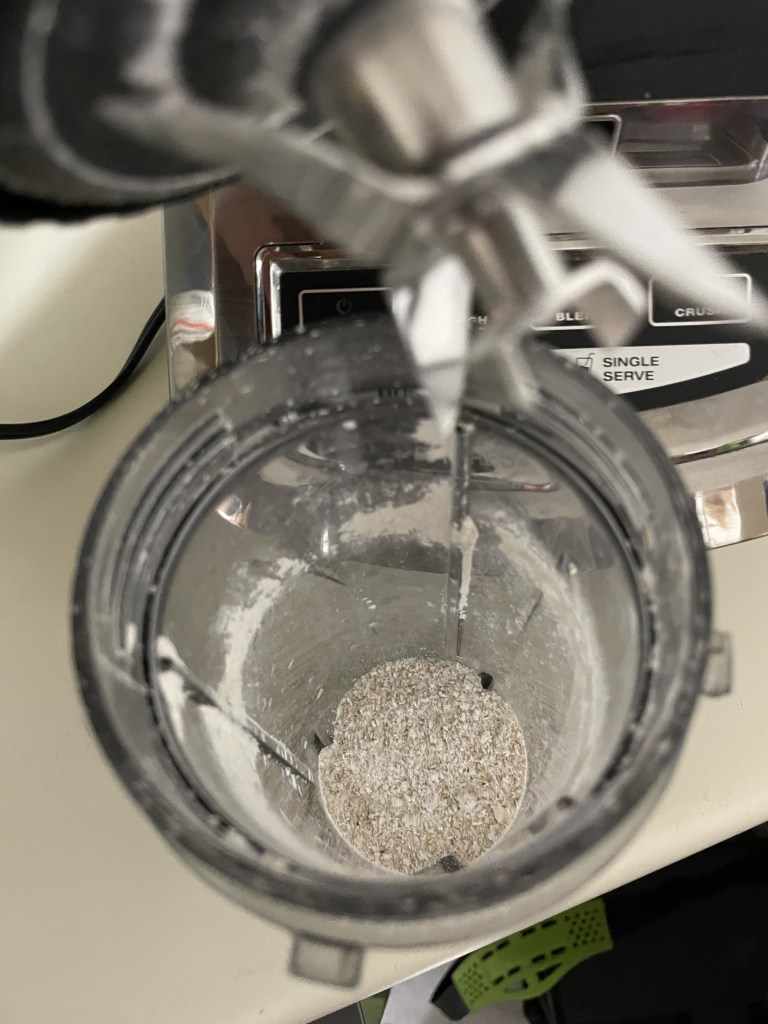
  • Grind up oats. If it mixes in with water turning it yellow, you’ve succeeded. It’s that easy.


Eczema Scrub

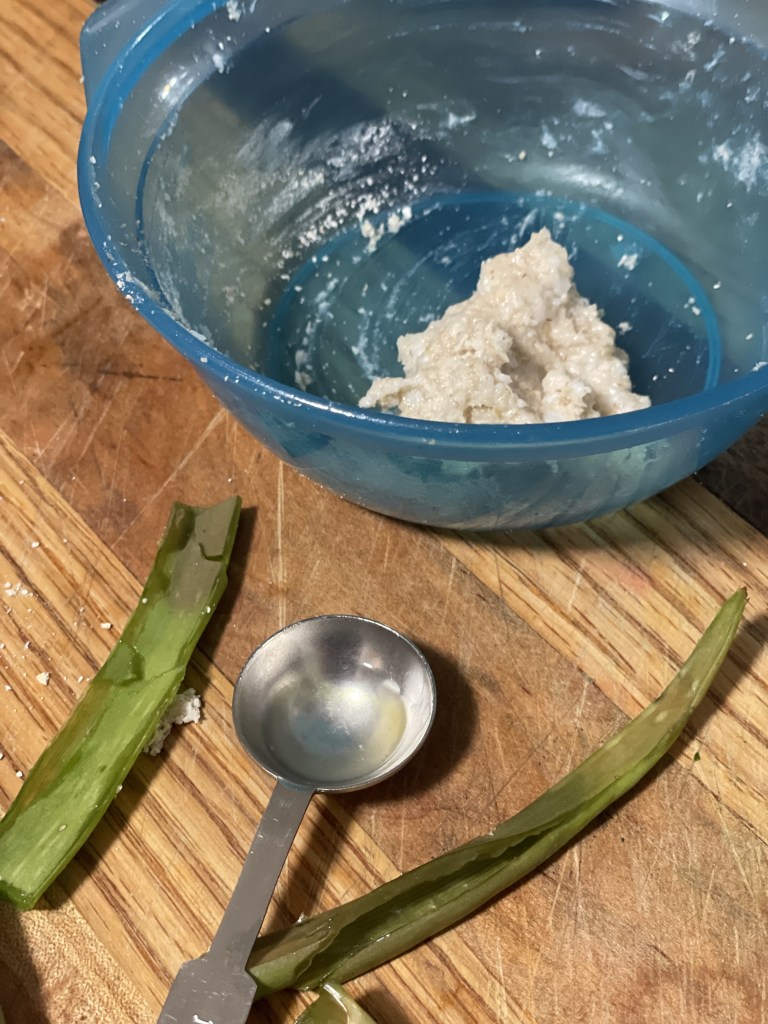
  • 1 tbsp of colloidal oats
  • 1 tbsp of coconut oil – not melted
  • 1 tsp aloe vera gel

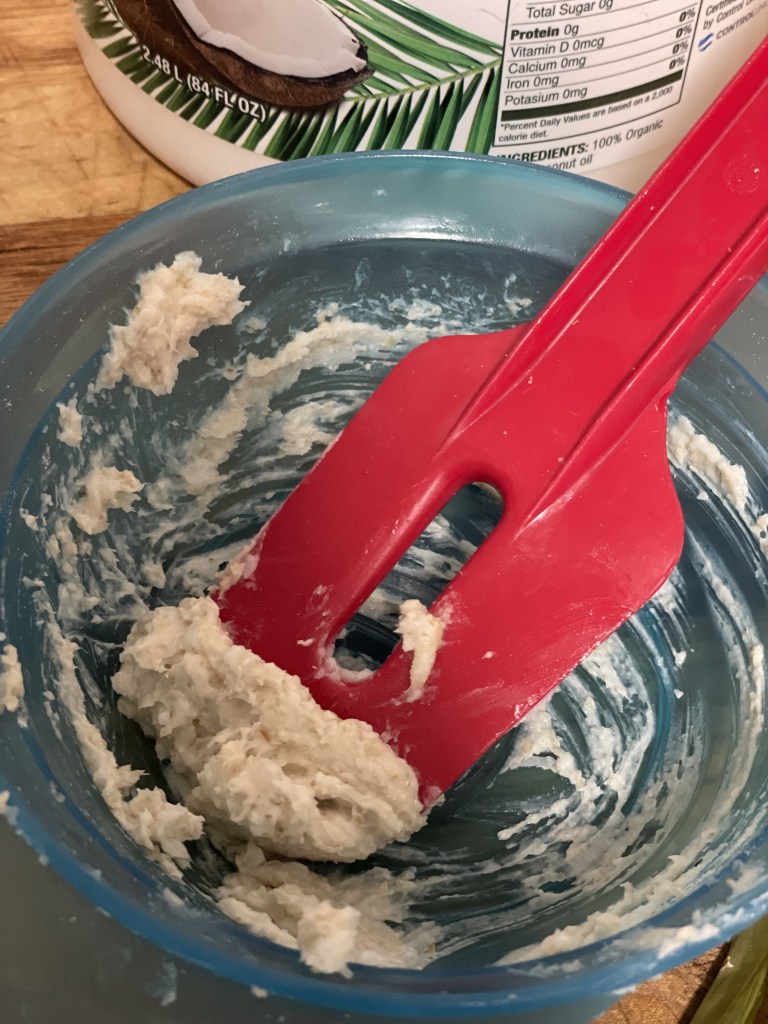
Mix it all together. Cover with plastic wrap. To use: Wash/Rinse hands as normal with soap. Using a small amount of the scrub, rub it onto your hands. Rinse off; pat dry. Your hands should be left oily. I would have added more aloe had my plant been more productive.

Eczema Ointment

  • 1 tbsp of colloidal oats
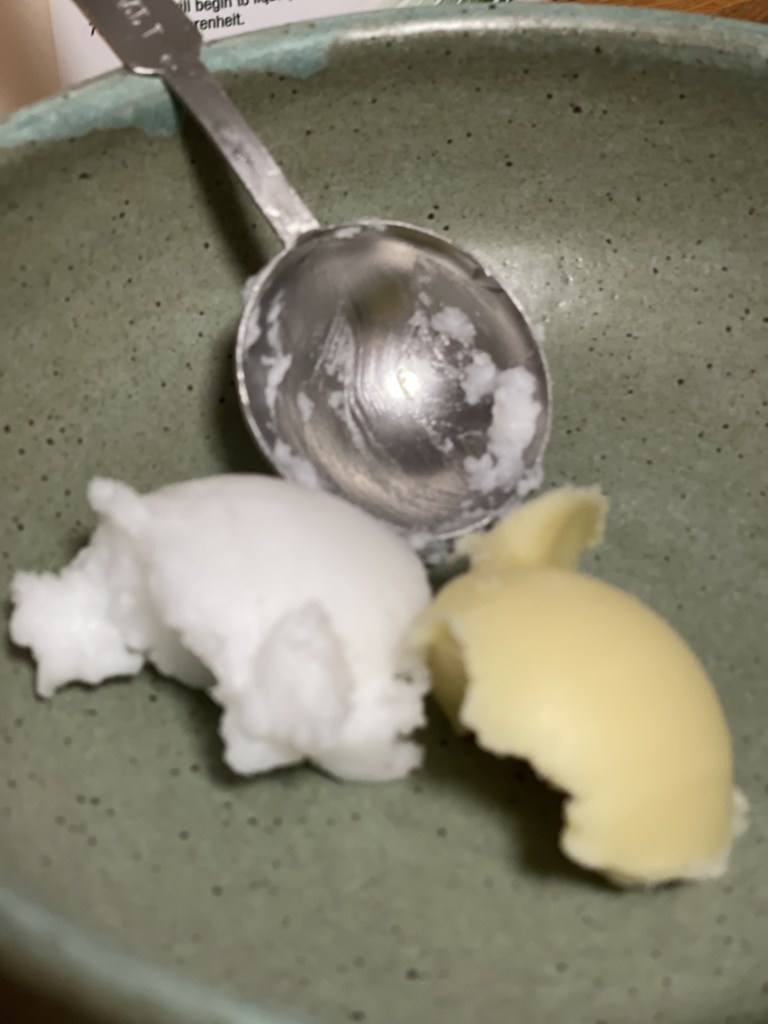
  • 1 tbsp of melted coconut oil
  • 1 tbsp of melted shea butter
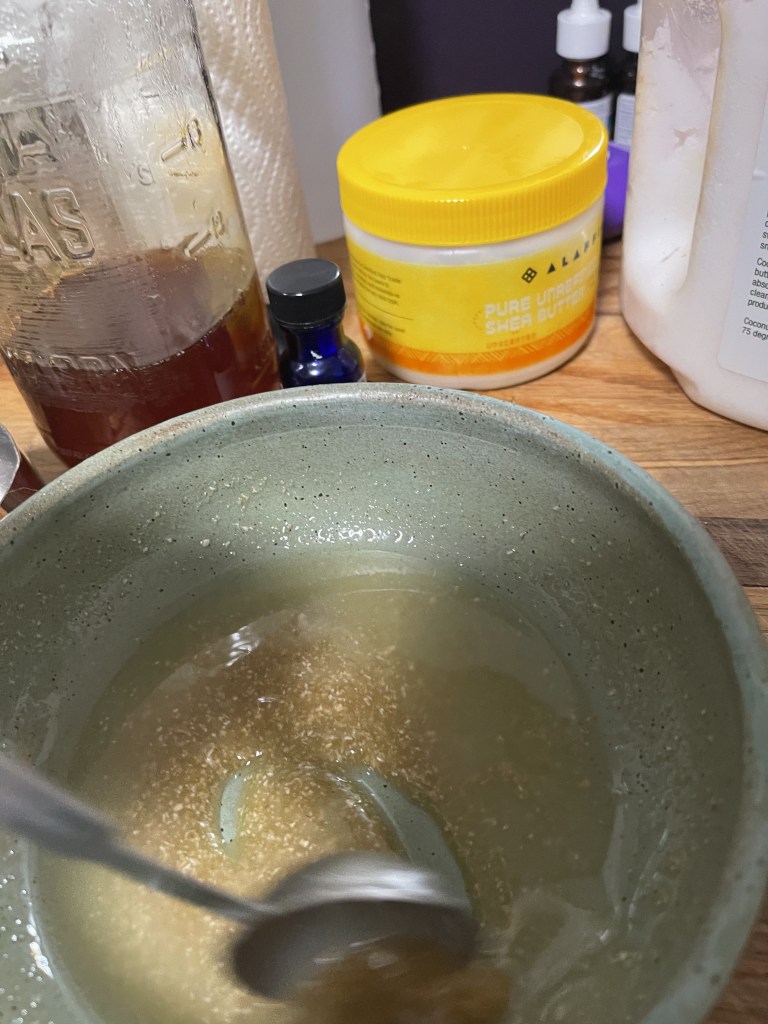
  • 1 tbsp of honey
  • 1 tsp of aloe vera gel
  • 30 drops lavender oil
  • 10 drops of evening primrose oil

Melt coconut oil and shea butter. Add the oats, honey, aloe vera. Again, I would have added more aloe had my plant cooperated. Once fully mixed together and slightly lumpy, add the lavender and primrose oil. Keep mixing until it is the consistency you like. Put in the fridge. Let harden. Now, after this, you can leave it out at room temperature, but I prefer the cold temp, so I leave it in the fridge. Otherwise it gets too melt-y for me.

Thoughts

I wasn’t a fan of the primrose oil by itself, but in the mixture, it was fine.

I have mixed feelings on the oats themselves–a little messy. I would grind them up even more next time I make this, or hell, maybe just use an oat oil to replace the oats for the ointment. I’m sure it exists. For the scrub, I would leave it.

I also have mixed feelings about the honey because, well, it’s so sticky. Just be prepared to be sticky, I guess, is the answer.

Next time I make some I will use other ingredients–like jojoba, castor oil, etc. Since eczema is an unending fiend in my life, I imagine I will have yearly attempts at creating the best concoction. If not for me, then for the Dragon Skin Kid.

Does this meet the swellness check? Absolutely. Our skin started healing as soon as we started to use this stuff, and it was certainly less itchy.

A Series, Part Three: The Happy Middle. My Dosha Journey—A Personal Perspective on Ayurveda

By Guest Blogger Aekta Bandodker

Please read A Series, Part One: Background. My Dosha Journey–A Personal Perspective on Ayurveda and A Series, Part Two: How our Doshas Develop. My Dosha Journey–A Personal Perspective on Ayurveda prior to The Happy Middle. It will give you the proper background for understanding doshas in the context of my personal history.

We are living in the modern age where a Pitta mentality is usually seen as some kind of gold standard. Think: hustle culture and being “fast to beat your enemies,” “racing to the top,” and other external pressures to compete and “keep up with the best” or “become the best,” even if it means being untrue to oneself or one’s true desires and interests. Of course, this only makes things worse for all of us. Perhaps those with a sensitive temperament take a stronger hit, or feel the consequences of this pressure the most. 

At least, this was my experience. These perfectionistic tendencies ingrained into me by my parents’ own Pitta imbalances turned into a life recipe that I used for everything. From beating myself up over failures or perceived failures while also developing a habit of judging other people more quickly and harshly based on very arbitrary and frankly, just plain stupid standards.

This is not to say that having standards is stupid on its own. But the way my mind held them, and how it made little rules for almost every little thing…well, my mind became a prison that blocked me from true connection, both with myself and with the larger world. It didn’t help that this Pitta tendency of a fast paced, highly goal directed, competitive and aggressive modern life was more or less favored by most of society and it was rare to find friends, role-models, and adults who didn’t encourage or buy into this unhealthy toxic hustle story. (I’d like to add a reminder here that Pitta energy isn’t bad or negative on its own; it’s the overdoing of it that leads people to burn-out.) 

Sure, a lot of it may have been simply fueled by intergenerational trauma and the after-effects of my parents’ generation (at least in my specific ancestry) living in a way where they had to hustle hard to survive because it’s what life taught them to do. It was totally valid to their own experiences of becoming adults, so it wasn’t really a surprise that they would spill that mindset onto me. 

And yes, some of my own life has also shown me that I must “hustle,” or “work hard” to survive. That is a fact, and it’s not the whole picture or the only fact or really, as my own personal experiences have shown me, a fact that’s worth putting up on a pedestal above all other words of wisdom about life. Hustle culture and climbing up the hedonic treadmill is not as glorified as many who engage in it day in and day out make it out to be. At some point, or at multiple points if the person hasn’t yet hit their rock bottom, burnout is inevitable.

 We don’t have to live this way. 

At least, I won’t live this way because I don’t want to burn out again. I don’t take pride in the fact that I worked so hard that I couldn’t work anymore and had to spend a few years unemployed–to date–just to recover and heal.

So where’s the happy middle? How did I get from the combination of a Vata-dominant imbalance (think lots of “air energy”) compounded by a Pitta-encouraging culture that led me to develop a secondary Pitta-dosha imbalance when my internal fire (or agni in Sanskrit) burned too bright? Remember, Pitta is the fire element, and it hurt both me and those I loved. How did I get to how I feel now? I am more calm, less anxious, more accepting, barely competitive, and totally okay with where I am in my journey even if it doesn’t scream “successful”. This “success” in the way that either I or the majority of the people I know may have imagined or defined when we were younger did not lead to true satisfaction, but to exhaustion. 

The answer was always there, literally beneath my feet and around me, if only I had taken the time to slow down & notice. The answer was the Earth, the ground, the gentleness of water. All of these were my missing elements. I had overdone air and fire. Without the steady and nourishing elements of water and Earth in my life, I drove myself to exhaustion.

If you’re still having a hard time understanding the metaphorical language of the elements and how they weave through our human lives, the following are a few other ways they’ve been depicted that might help you grasp the idea better. Not all of them are necessarily stories created to demonstrate Ayurveda, but they still serve as good examples of showing the analogies between the elements of nature and human behavior and personality. 

○      The Disney Pixar movie Elemental

○      Effortless Action: The Art of Spontaneity YouTube documentary by Jason Gregory 

○      The Art of Effortless Living YouTube documentary by Jason Gregory

When I found myself on the bridge between trying to people-please–showing myself as some successful poster-child of my parents–and how I truly feel about the meaning of success and internal peace and happiness, my real life began. My Vata & Pitta dosha imbalances led me to burn out. I believe this is how I really began to understand who I am, all masks down and people-pleasing aside. When I was at my rock bottom and saw how trying to meet someone else’s idea of success had caused a lot of internal confusion by clashing with my true ideals, I began to decondition & came home to myself. I began to go within for validation and meaning, learning how to embrace how I really felt and nurture who I really was, despite the constant change and seeming “failure” my life may have looked like from the outside. 

If we’re only going by external, material factors–like having my own place, or having some kind of steady career that’s making me a lot of money–I have neither of those things at the moment. What I do have though, and no longer seek externally, is a general sense of inner peace and joy that comes from the little things in life that we can’t notice unless we slow down. 

I still have my Vata & Pitta tendencies; it’s not like I no longer embody anything from those dominant doshas, but the shift pre-burnout to post-burnout, as I write this a year after I first hit my rock bottom, is that there’s this third energy. This Kapha energy, the slow and deliberate, soft, and nurturing energy, that’s both steady and strong yet quiet. This “no need to boast or show off” energy that’s more stable has come into my daily rituals and how I approach the time I spend on my Vata-Pitta pursuits. This third energy is helping me ground, serving as the backdrop of inner assurance and calm that I’m finally allowing more space for. 

My natural baby Kapha energy, this bubbly little girl that I was before I turned 4 and headed on my Vata (and later Pitta) dosha trajectory, was never truly gone or lost. She was always here inside me, waiting patiently for me to let her come back to the forefront and give more voice to my life’s decisions. 

She never left me… I simply wasn’t listening to her and saw her more gentle approach as “weak”. Even though at the moments in my life where I have been the most proud of myself, or have needed myself the most and shown up, this softness and vulnerability, and my capacity to be sensitive, has been anything but “weak.”

My sensitivity has been the beacon of light in my darkest hours, and if ever I saw it as “weak,” it was just another internalized and unhelpful, ultimately destructive message I had taken on from those who had lost touch with their own vulnerability–their own inner child and the place in which true compassion lives. Now that I understand this, from years of continuing therapy and just coming out of my worst-yet rock bottom, I don’t see it as shameful or anything to hide. In fact, gentleness is what is saving me and helping me recover, and not just recover, but thrive while I recover and rebuild my life in a way that honors and makes space for this slower pace of movement through all that I have to do.

I am returning home to my truest self–my Prakriti. My internal landscape is beginning to shift, slowly informing and influencing my external one to change along with it. I am gaining weight where I used to be underweight, and I am not forcing things to happen but learning to respond more to what life has to offer me. I feel more like “myself,” in the purest sense of the phrase of what it means to be “oneself,” and it’s quite loosely defined. It has room to change and breathe and make mistakes and take things slowly, knowing that rushing to the ends of things really sucks the joy out of the entire purpose of life-which is to savor, and cherish, since life itself naturally feels like it’s moving faster as we grow older and we don’t need to run anywhere to make a home run. 

It’s not like I never connected with the elements of earth and water previously, but the shift has been in the effort I put towards this connection. In the past, with my Vata-Pitta dosha driven mindset, I wouldn’t have counted sitting in the backyard or briefly walking around my parent’s house or the neighborhood as a nurturing, Kapha activity.  Because of the pressure I put on myself about going to the park, I was missing out on what was always available to me right outside my doorstep. 

Now I spend at least 20 minutes everyday in the yard and sometimes longer if I decide to stroll the neighborhood or attend to the plants my parents are growing. Both ways (going to the park for a long hike and spending time in a home-garden space) are still grounding and encouraging of balancing through Kapha, but my attitude about it is what’s making a real difference in me truly feeling its effects. Afterall, it’s more relaxing to simply step outside my room for half an hour and take in the fresh air without getting out of my pajamas, than it is to think less of myself for not putting in the effort to go to the park (which, if I forced myself to do it, would aggravate my Pitta imbalance anyway since this summer has been so hot!).

I’ve learned that sometimes, it’s not even the activities we do, but the approach we take towards them. In this case, less effort for the same deal is yielding a better sense of well-being for me. Whenever it’s not too hot for the park, I am also spending more time by the lakes and bodies of water. It’s quite meditative and soothing to stare at the ripples that glimmer under the light and it immediately calms my nervous system. 

Other ways in which I’m helping rebalance my doshas by adding Kapha are by planning my activities around my meal times and giving myself more time to savor what I’m eating, rather than waiting to rush to the next activity. I’ll admit that I still look forward to what’s next and it’s still a work-in-progress for me to go through all of my meals without my phone & without my entire focus on my food. But by paying attention to how my body feels when I eat and do other activities, I am better able to discern when it’s time to simply focus on my food and when it’s okay to divide my attention between eating and something else. It’s definitely not the easiest task but I am finding more and more ease with it as I practice truly savoring my food and spending more time in the kitchen, even down to what I eat. Adding more ghee and rich soups, preparing softer meals that are easier to digest and more dense in their composition are some ways that I am literally adding more weight in my system to help me ground. 

Re-designing my life around my somatic needs in this way is naturally creating more breaks for me that act as buffer-times between other task-oriented activities and this is creating a new routine where personal check-ins are not left for the end of the day or just dreamt about in the beginning before the day “carries me away.” Rather, my overall pace is less rushed so that I feel like I am really the one engaging in the day intentionally rather than the day simply “happening to me.” My life is not one continuous sport & I’m not trying to race to my deathbed. This newfound & balancing Kapha energy is very beautiful. I hope to seep in more of it in the coming months as I travel to India, reconnect with my roots, & engage in various Eastern medicine programs to support my recovery. 

I’d like to thank my parents, my grandmother who has passed away but continues to live with me in spirit, my brother, and my closest friends and mentors for supporting my recovery journey. Although my parents may have unintentionally contributed towards some of my unhealthy internalized belief systems that led to my dosha-development when I was younger, I am still grateful for their understanding in the choices I am making now as I’ve begun unlearning habits and modes of being that no longer serve me & stunt my growth. 

I truly believe our parents, as well as our friends, mentors, and the larger circle of people in our growing environment do the best they can with where they are on their own journeys. It is ultimately up to us to discern if something is hurting or helping us and take a different path. Everyone on our path is a teacher and a student in this way, so I also thank you, as the reader, for making it to the end of this 3-part series and hope you gained something from witnessing my journey. I look forward to deepening my understanding of Ayurveda in India and hope to share a full-recovery blog post in the near (or distant) future since recovery has its own timeline & I wouldn’t be honoring the Kapha in my life if I were to rush its process!

Aekta Bandodker is a lover of knowledge and an artist through and through. She believes in the healing power of self-expression and story-telling and the liberation that it provides in transforming trauma. She loves to help people change their inner narratives so that they can take back ownership of their lives. Her favorite activities include spending time with close friends and family, listening to music, learning through audiobooks and podcasts, writing or creating art, and spending time in nature. Check out her website here!
A Series, Part Two:  How our Doshas Develop. My Dosha Journey—A Personal Perspective on Ayurveda

By Guest Blogger Aekta Bandodker

Please read A Series, Part One: Background. My Dosha Journey–A Personal Perspective on Ayurveda prior to How our Doshas Develop. It will give you the proper background for understanding doshas in the context of my personal history.

So what exactly does any of this have to do with Ayurveda and the doshas? If you haven’t noticed, I “caught” the patterns associated with a Vata dosha imbalance at a very young age. Too young. But that’s life. These patterns would be anxiety, being really skinny, being easily confused as well as the gastrointestinal issues I was already developing. In my previous post, I mentioned never being officially diagnosed as someone on the autism spectrum. I suspect that if I were to get diagnosed, the Vata dosha symptoms I struggled with would very easily overlap with many of the autism spectrum-related symptoms that a professional from a clinical, Western approach to health might take. 

We don’t choose when the imbalances begin to affect our being. We don’t choose when they set us off on a particular life trajectory that most of us later unravel and undo by replacing them with a healthier pattern. This trajectory then reaches its end to basically confront its own death when the maladaptive patterns become so apparent that we’re forced to change them. Only then do we realize that we never wanted those patterns in the first place! 

It’s not like I chose, as a little baby, to have the parents I had (coming with their own level of emotional intelligence that was not good enough for my easily shaken temperament), or the environment or culture or anything else I had in those early years until now. The little choices I made when I did have the agency to make them as I got older were the exception, not my norm. Most of the time I was walking around doing things under the heavy influence of my rather overbearing & critical parents, and nowhere did this show up more than it did in our kitchen and dining table. Which, of course, is the place we are supposed to eat and digest in peace for our bodies to actually retain and better utilize what we’re eating. 

It seems that my body reacted to the stress by tensing up while eating my daily meals–three times a day, seven days a week–more than anyone should have to tense up. It’s like my body decided, “Hmm, where we eat is not a safe space. Let’s hurry up and try to finish this as soon as possible and go back to our room to enjoy an activity with our headphones.” 

I was already a slow eater, which did not work in my favor in this scenario. To add to the unnecessary fussing about my food or eating habits, my parents repeatedly made fun of my slow eating and told me I didn’t know how to take jokes. They did not understand what they considered as “innocent fun” was really shaping my ideas and attitude towards food and how one “should” show up and eat at the table. This was down to very tiny details that took away the pleasure of eating a meal. This kept me on high-alert & trying to have “perfect eating etiquette” at the dinner table so that I could get the approval I longed for: to be seen as “good,” or considered worthy of praise. This was the only way my parents knew how to verbally express love. 

Now, having said that I had no control over who my parents were, my heritage or the timeline of my exhaustion, there are some Gene Keys and Human Design enthusiasts and practitioners, and even some people in the yoga community who are steeped into the philosophies of re-incarnation, past lives, and karma we carry from one life to another. They might argue that I did choose everything that’s happened, is happening, or is about to happen in this life: that my “soul” chose to have these issues so I could live some kind of epic life and learn to resolve them. Basically so that my life wouldn’t be boring. Although that might sound somewhat reassuring through the perspective of grand meaning–making sense of this chaotic and unpredictable thing we call life–it’s not the purpose of this series. 

Honestly, I’d like to just take you through the key events and circumstances in my life that shaped the development of my dominant Ayurvedic imbalance, or my dosha. If you recall, from the previous post in the series, a dosha is essentially an energy in the body which governs and regulates physical, mental and emotional characteristics.  

Our doshas develop from the jumble of messages our subconscious minds internalize, misunderstand, or take too seriously. Our doshas are not who “we’re meant to be,” or “our true personality” or really anything along the lines of wearing it like some badge of honor. Our doshas do come with their strengths, but their purpose is to show us where we need to come back to balance. Or rather, what parts of us, what sets of qualities are out of balance and need to be kept in check so that we don’t lose ourselves or come to that rock-bottom moment I described in the beginning of the series. 

Rock bottom is often the only way most of us will even take Ayurveda and its teachings, or any other nuggets of ancient wisdom seriously. At least this was my experience. And nuggets? Yes, we are going to be talking about food with more depth later. 

Some terms quickly defined for those who might be new to Ayurveda:

  • Prakruti- Our natural disposition, the one we’re born with and embody when we’re in our healthiest mental, emotional, & physical state. 
  • Vikruti– Our doshic state, the one we develop over the course of our lives as a result of the combination of messages we internalize from our environment. Our Vikruti can consist of more than one dosha, though most people have a dominant one.
  • Vata– The qualities of air & space/ether that are associated with movement through all beings, creativity, flexibility, and healthy internal rhythms at its best and fear and anxiety when in excess. 
  • Pitta– The qualities of fire and water associated with passion, determination, strength, intelligence, and a healthy metabolism of energy at its best and hatred, jealousy, and anger at its worst. 
  • Kapha– The qualities of water and earth associated with stability, grounded-ness, compassion, kindness, patience, forgiveness, lubrication, gentleness, endurance and immunity at its best and depression, envy or extreme attachment at its worst. 

For example, someone can have dominantly Vata dosha if they’re prone to anxiety (like I was). They can appear thin in their appearance, prone to dry skin, generally aloof or “airy,” speak fast or easily jump from one topic to another. These, and other qualities, are associated with the elements of air and wind. 

The same person with a Vata-dominant dosha can also have a secondary dosha of Pitta or Kapha. This means that they’re also heavily influenced by the elemental qualities associated with their secondary dosha, but not to the same detriment as their primary, or dominant dosha. 

In my case, I had a secondary Pitta-dosha, which meant that I was not only pretty scattered, but also very driven to succeed in whatever I was doing. It meant that I wanted to know all the steps involved in getting from point A to point B, opting for effectiveness and speed whenever it was possible to do so. My most ambitious goals also resulted from the Pitta fire in me, so having a secondary dosha of Pitta was not necessarily an entirely negative thing, it just hurt me when the fire burned too strongly without being balanced by the softer qualities associated with Kapha.

The main point is to understand how living through the combination of one or two doshas in overdrive without incorporating qualities of the third, can cause someone’s health to decline because something essential is missing or depleted. 

At our healthiest state, we embody the qualities of all three doshas without any one or two of them becoming dominant over the others. There’s also a way of becoming depleted or out-of-whack with all three, rather than just one or two doshas.

Having all three in our daily disposition doesn’t necessarily mean that we are healthy within their composition; it simply means that we cycle through the potential imbalances found in all three more frequently than a truly balanced person might. Anything in excess or deprivation leads our bodies and minds to feel off and it takes conscious awareness and effort from our part to either not let this happen, or take actions to reverse whatever the imbalance might be.

This is essentially what the science of Ayurveda helps us do. It helps us identify and accept where we are in excess or deprivation of essential life-forces through the metaphors of the 5 elements (fire, air, earth, water, space/ether). It then helps us figure out what steps we can take to return to center, or Prakruti

In other disciplines, this could be seen as connecting with our inner child or “coming home to ourselves.” There are many ways to talk about the subtle and transformative gifts that living an Ayurvedic lifestyle can bring us, and they all come down to returning to the purity of our beings before conditioning did what it did with us. How we return to this pure space and how we embody it will look slightly different for each person, since we are all unique individuals, even if we share really similar imbalances or Vikruti with other people we might know. 

Ultimately, the journey is one we take alone with ourselves, perhaps with the support and guidance of others who are taking their own journeys. We must remain true to the nuances of our own path back to good health. 

My subconscious mind had internalized many harmful messages along the lines of, “You’re too much. Your emotions are too much. Your honesty is too much. Your presence is a nuisance. You’re a burden because of your high levels of sensitivity to our ‘normal’ ways. You should change and be like us, and make sure you get it right!” etc… and etc…

How were all of these messages being interpreted by my developing brain, and what was my body doing as a way of coping with it? 

Shrink. Yes, literally shrink. Become invisible. Become smaller. Be seen, not heard. And be seen like the ideal image of fitness-skinny, but not too skinny. “You need to eat more,” they would tell me. “Behave well.” “Please us.” This would allow me to receive love or be given any ounce of at least pseudo-loving attention, this “loving” attention being disguised in the form of praises and compliments about my behavior and appearance. This then led me to people-please in order to fill my need for loving attention. 

It was never enough though. There was always something to improve, I gathered, whether that was due to a general attitude of self-improvement in the home, or just a lack of conversation that did not have anything to do with working more, doing what was “next on the list,” or correcting something. This correction could be changing a person’s behavior or just a task at home that needed more attention than simply being in each other’s company by spending quality time together. 

All of this led me to become pretty isolated even in my own family, with the exception of spending time with my only brother, who at four years younger than me, became a life-saver in his own way. I’m not sure if I can imagine my childhood without my brother–us on each other’s sides, attending to each other’s emotional needs that we lacked receiving from our parents. I’m not blaming my parents or trying to play the victim here; they did the best they could with their own unhealed and traumatized histories, but I am stating my honest feedback of how I experienced their parenting. 

Perhaps my body coped with this family dynamic by shrinking and my mental and emotional states also formed to ensure I remained small. This isolation, increased disconnection and feelings of alienation from my own body and its natural cues led me to become more and more intellectual about things. I learned how to understand the complex world of people. I became highly competent at reading and understanding the slightest nuances of people’s behaviors so that I could know what the “right” or “most appropriate” thing was to do or to say (or to not do or say) in almost any given situation. I kept learning to seek perfection in it all. 

Yes, perfection. No mistakes allowed; they were too expensive and felt too life-threatening most of the time. My dad’s anger, and my mom’s snappy criticism just taught me to avoid conflict and no, I did not just become a sheep and give up my individuality or stop expressing opinions, especially for the ones that felt very dear to my sense of self at my core. But I learned to be highly selective of when I shared my views, preferences, or opinions and even masked my true thoughts and feelings about things if it seemed like they might cause too much of a disturbance to the status quo.  

Often, I would blend in so well, I would feel exhausted later and forget who I was from the un-natural chameleon behavior that everyone else saw as “an outstanding child”, “so polite and well-mannered”, “so quiet, causing no fuss”, or “such a good listener, so obedient”. “We wish we all had a child like your daughter (and son). You must be great parents.” 

It was all a facade. The message in translation was, “Don’t show your true self or be your true self except in private, or maybe with a few close people who you can trust to show your natural, unfiltered, unmasked self to.” 

All of these frickin’ rules about how to live amongst other human beings! 

And I was surrounded by them, so I did my best to fit in and learn “the way,” which I later discovered was not really “the way,” or the true way, but just “the way to survive and be accepted”. Shrinking might help me survive, thought my subconscious brain as it sent fast messages to my body about threats in my environment.

The Vata dosha or my Vikruti developed, and my natural, more Kapha Prakruti vanished rather quickly, only resurfacing as major depressive episodes when the imbalances of Vata, Pitta and Kapha went too far. 

For more information on Ayurveda, here is a great place to start. For more information on Human Design, look no further than here. The final installment, The Happy Middle, will be released next week. The first installment, Background, can be read here.

Aekta Bandodker is a lover of knowledge and an artist through and through. She believes in the healing power of self-expression and story-telling and the liberation that it provides in transforming trauma. She loves to help people change their inner narratives so that they can take back ownership of their lives. Her favorite activities include spending time with close friends and family, listening to music, learning through audiobooks and podcasts, writing or creating art, and spending time in nature. Check out her website here!
Harness the Power of Self-Advocacy for Optimal Health

Image via Pexels

By Guest Blogger Zack Spring

In a world where health is increasingly becoming a personal responsibility, mastering the art of self-advocacy in healthcare is crucial. This skill not only positions you to receive the best possible care but also emboldens you to lead a more health-conscious life. This post can help illuminate how to elevate yourself as a proactive participant in your health journey.

Gaining Knowledge for Empowerment

Empowering yourself begins with understanding your health needs and options. Delve into reputable resources to learn about your health conditions and the various treatment pathways available. Consulting healthcare professionals for accurate and tailored information will augment your knowledge base, enabling you to make informed decisions about your health.

Maintaining Accurate Health Records

Your medical history is an essential component of your health advocacy. Ensure you keep a detailed record of all medical interactions, including tests, diagnoses, and treatments. Opt for organizing these records in a digital format for easy accessibility. This organization enables you to quickly reference and share your medical information when necessary. Such meticulous record-keeping enhances your ability to efficiently manage your healthcare journey.

Embracing Personal Responsibility

You play a crucial role in managing your health, where adherence to prescribed treatment plans is key. Commit to a healthy lifestyle marked by better eating habits. Incorporate regular physical activity into your routine for optimal well-being. Your dedication to these practices significantly influences your overall health. Embrace this responsibility to ensure a healthier, more fulfilling life.

Learn to Manage Your Medical Records   

Submitting any forms your healthcare providers suggest in a timely manner is essential for efficient healthcare management. By doing so, you’ll be able to secure appointments swiftly, gain access to your medical records, and easily forward these important documents to any specialists involved in your care. A valuable resource for ensuring you complete your forms quickly and accurately is a digital tool that enables you to sign and fill out PDF forms online. This eliminates the need for printing and mailing, allowing you to upload, modify, download, and share documents with ease.

Communicating Effectively With Healthcare Providers

Maintain open and honest communication with your healthcare providers at all times. If you harbor any concerns or questions about your health, confidently express them. Understand that your ability to communicate effectively is vital. This ensures that the care you receive aligns with your individual needs and preferences. Emphasize clear dialogue as a cornerstone of your healthcare journey.

Engaging in Stimulating Conversations

Use your curiosity to guide you through the complexities of your healthcare. Question your healthcare team about the range of treatment options at your disposal. Investigate the potential side effects of these treatments and consider alternative therapies. A thorough understanding of all your options is critical. This depth of knowledge enables you to make informed decisions about your care.

Participating in Health Decisions

Make your voice heard in decisions regarding your healthcare. Actively participate in discussions about your treatment and care to ensure that your preferences and values are incorporated. Understand that your involvement is crucial for tailoring healthcare solutions to your specific needs. Realize that collaborative decision-making results in more effective and personalized healthcare outcomes for you.

Championing Preventative Health Measures

Prioritize preventative care and routine screenings to safeguard your health and facilitate the early detection of potential health issues. Understand that these proactive steps are essential for maintaining your well-being. Play a pivotal role in your own health journey by consistently engaging in these practices. Inspire those around you to adopt similar preventative health habits for their own benefit.

Embarking on the path of becoming a self-advocate in healthcare is a transformative journey towards a healthier, more empowered existence. By educating yourself, diligently maintaining health records, actively participating in your care, making conscious lifestyle choices, and engaging effectively with your healthcare providers, you position yourself at the forefront of your health journey. Your commitment to these practices ensures that your health remains your highest priority.

Embark on a journey of healing and rejuvenation with Nani Lotus Bodywork. Discover tailored bodywork services, classes, and more to help you return to balance—reach out now and take the first step towards holistic well-being.

Zack Spring works as a tech consultant which requires him to travel frequently. He also enjoys running and cycling – staying active as possible. He created TravelFit.info to encourage his readers to stay active while traveling.

How to Smoothly Navigate the Transition to a New Doctor

Image By: Freepik

By Guest Blogger Zack Spring

When your primary care physician retires, finding a replacement becomes crucial. This transition is essential for maintaining the quality and continuity of your healthcare. You must adopt a strategic approach to find a doctor skilled and in tune with your healthcare needs and lifestyle. The right doctor will not only be proficient but also a perfect match for your personal health philosophy. Ensuring this alignment is key to your future healthcare experiences.

Seek Recommendations

The advice from a retiring physician is priceless in the hunt for a new healthcare partner. Their deep understanding of one’s health history and specific needs positions them ideally to suggest colleagues who might offer the best fit. Utilizing these referrals can streamline the search process, connecting one with professionals pre-vetted for their expertise and compatibility with one’s healthcare goals.

Prioritize Accessibility

The convenience of location becomes paramount when selecting a new healthcare provider. A doctor’s office within a manageable distance from home or work ensures that routine checkups and unforeseen visits remain hassle-free. This consideration is especially vital in emergencies, where the speed of access can be crucial. Thus, choosing a physician whose practice is easily accessible maximizes the practicality and efficiency of healthcare management.

Embrace Digital Solutions for Medical Records

In the digital era, effective management of medical records is essential. Transitioning to a new healthcare provider is made smoother by digitizing health documents and saving them as PDFs, facilitating easy sharing of one’s medical history. You can use a PDF merger for enhanced organization—try this online tool to link files. This proactive step is not just about maintaining up-to-date health records; it ensures the new physician has immediate access to all necessary information, enabling them to provide the best possible care.

Address Your Health Concerns

You must find a doctor who focuses intently on your specific health issues. Your physician should excel in general healthcare and be eager to tackle your unique health challenges. This approach builds a strong, trust-based relationship between you and your doctor. Compatibility with your healthcare provider ensures your health concerns are thoroughly addressed. It’s essential for managing all your healthcare needs effectively.

Evaluate the Need for Specialist Care

Determining if you need specialized care is vital when selecting a new primary care provider. Your doctor’s capacity to connect you with specialists significantly impacts your overall health management. This connection guarantees a cohesive healthcare journey, integrating specialized treatments and consultations. Such access is a key component of your comprehensive health strategy. It ensures you receive well-rounded care tailored to your specific needs.

Understand Hospital Affiliations

The hospital affiliations of a prospective doctor can greatly influence one’s decision-making process. Being aware of the medical centers a doctor is associated with offers insights into potential care settings in case of hospitalization. It also provides a glimpse into the quality and reach of specialized treatments and facilities accessible through these affiliations.

Explore Payment and Insurance Options

Gaining clarity on payment methods and insurance coverage is critical when selecting a new primary care physician. Engaging in direct conversations with the new doctor’s office regarding billing procedures, insurance acceptability, and possible out-of-pocket expenses can avert unforeseen financial burdens. This level of transparency ensures that the healthcare services availed align with one’s financial planning and insurance coverage.

Embarking on the search for a new primary care physician when your doctor retires can be a seamless and rewarding journey with the right approach. The essence of this transition lies in finding a healthcare provider who is not merely a medical expert but a partner in one’s health journey. By emphasizing compatibility, accessibility, medical document management, and comprehensive care, one sets the stage for a fulfilling and secure healthcare experience with the new doctor.

Zack Spring works as a tech consultant which requires him to travel frequently. He also enjoys running and cycling – staying active as possible. He created TravelFit.info to encourage his readers to stay active while traveling.