I Did Insight Timer’s Nervous System Reset Challenge

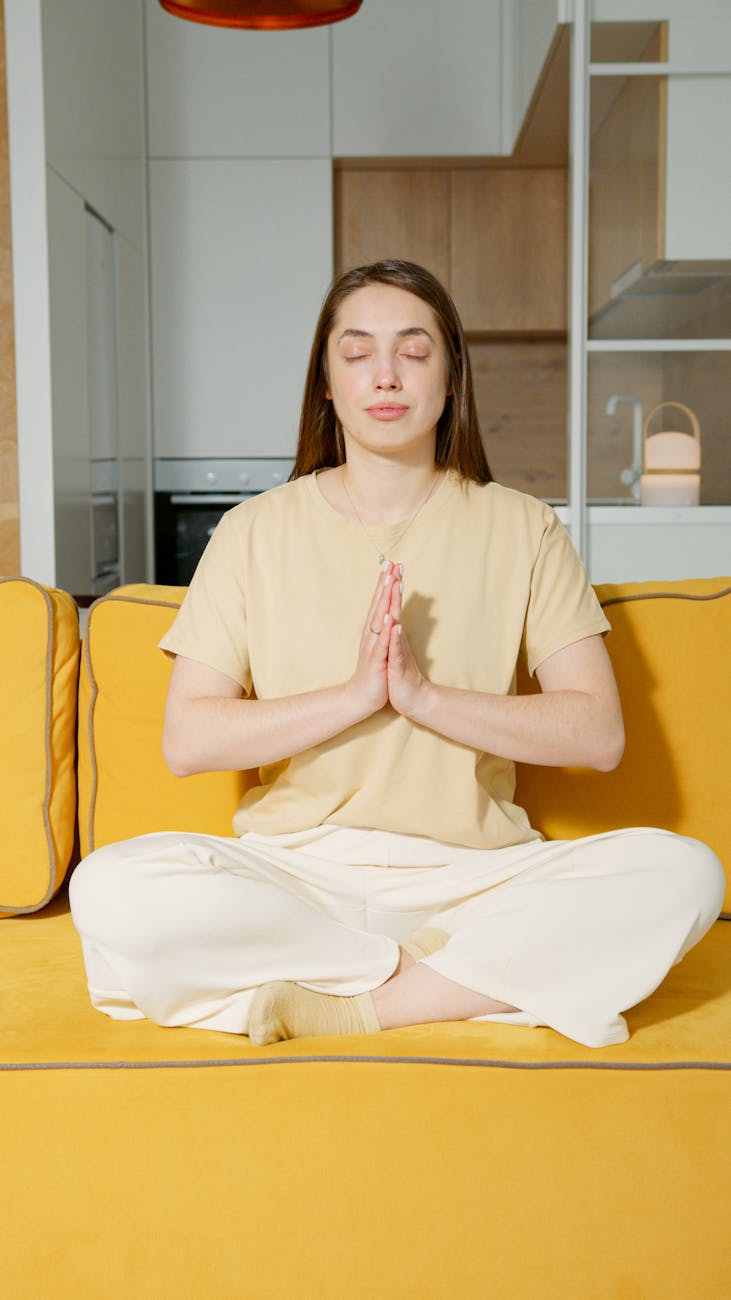
Photo by Artem Podrez on Pexels.com

… and I’m super happy I did.

I am trying to bring more thoughtful language into my bodywork practice, especially when it comes to the newer services I am offering. I have a lot of training under my belt, but I’m not terribly great at verbalizing in the moment.

Doing this challenge–and consequently, taking notes so I can re-process wording–is helping me curate the language I’m seeking to create.

However, it’s also equipped me with some fascinating new tools. Having been around this field for a long time now, I don’t often feel like many new ideas are added to the wellness community. Well–other than the plethora of new scientific discoveries supporting that which we already experience and know.

See, I forget I’ve lived in a child-induced cave for the past ten years. This practice was a good reminder that while ‘breathe in, breathe out’ is a golden standby and will always be, fresh wording can be created to engage the brain and reset the nervous system.

Insight Timer’s challenge lasted twelve days. However, I freely admit I did have to double up some days due to weekend shenanigans. Even so, the sessions were ten minutes or less for most of them. For those who feel a time crunch, it was perfect to get a meditative activity in each day without surrendering a “to-do” on your never ending list.

Six Notables of the Twelve Sessions

  • Vagal. The repetition of breathing in for three breaths, and out for three breaths over and over again for several minutes without a break was simple and effective. The lasting effects of doing it for more than just a few cycles of breath made a difference.
  • Body-Based Grounding. Beyond just sussing out where a body part is touching something for awareness, you were guided through a series of actions and assessment which added depth to the meditation. Feel the support of what you’re touching, then the weight of what you’re touching. Add pressure, then release, noticing what you are left behind with. Is it warm? Is it cool, tingly? You work with one point at a time, settle, then do a little stretch. Ingenious.
  • Five-Finger Tracing. Why have I never heard of this?! (Oh yeah, the cave thing.) I’ve taught my son another variation of this finger tracing. Unfortunately, while he loved it and asked me to share it with him again, naturally I couldn’t remember exactly how to do it. This method however, is super easy to remember. All you do is trace the outside of your fingers with the index finger from your opposite hand. Breathe in on the outside, exhale on the inside. It engages various senses to disrupt an unwanted cyclical pattern in your brain.
  • Extended Exhale Breathing. You’ve got to be in it to win this one. It was hard to do. I knew it would be, yes, from personal experience as an asthmatic, but also from yoga training suggesting asthmatics nevvveeeer do breathing like this. If you are up to the challenge, you can really extend the exhale. Beyond the six seconds. Breathe in for four to six seconds, but out eight to ten seconds. What?! The second time I practiced this meditation, I managed to do it without coughing. It definitely breaks up monotonous thought patterns, but heed with caution! It is not safe for everyone.
  • Humming for Calm. Sure, we’ve all OMMMMMed at some point in our lives, but this was different. This was led as a directed practice to hum your own sounds for a bit, then stop, then do it again. Maybe I enjoyed as much as I did because of the directional approach to humming rather than it being open-ended.
  • Regulating Through the Eyes. This was really interesting. I’ve tried EMDR before, but to use your eyes in meditation as a way to look without attaching judgment was new to me.

In Conclusion

Insight Timer often offers challenges you can do for free. If challenges aren’t your jam, you can also find random sessions of many different types, including energy sessions. There are sounds, and as the name suggests, a timer you can use for background sounds during your unguided meditation. It’s a pretty cool app with a lot to offer! It’s been around for a while now, but the improvements I’ve seen in the past several years are nothing short of miraculous.

This OMMMtastic post is brought to you by Allison of Nani Lotus Bodywork, & powered by Meditating Squirrel. AI was not used in crafting this article, thus, all errors belong to Allison. Also–she is in no way affiliated with Insight Timer, although, truth be told, she did upload a kid’s meditation once, which was rejected due to sound quality. Will she try again? That is the question.

Thank you for reading! Please support this blog with a one-time donationor by sharing it with others.

Breathe Easy: Real-World Ways to Manage Everyday Stress

Photo by Freepik

By Guest Blogger Julia Merrill

We live in a time where your smartwatch can track your pulse — but not your peace. The truth? Everyone’s stressed. From running late to handling constant notifications, calm feels like an endangered species. Still, it’s entirely possible to reclaim your mental balance — even in chaos.


TL;DR

  • Stress is normal. Constant stress isn’t.
  • You can re-train your body to chill faster.
  • Small daily habits compound into real peace.

How to Reset in 60 Seconds

When you feel tension rising, here’s a micro-method that works:

  1. Pause — put both feet on the floor.
  2. Name the feeling. (“I’m overwhelmed.”)
  3. Exhale longer than you inhale.
  4. Do one grounding thing — refill water, stretch, or open a window.

Apps like Calm can walk you through breathing or short mindfulness breaks if you need structure.

The goal isn’t to feel perfect — it’s to feel present.


The Everyday Stress Checklist

  • Drink water before coffee
  • Get 10 minutes of daylight
  • Move every two hours
  • Say no once today
  • End the day with zero screens for 30 minutes
  • Laugh at something dumb (seriously)
  • Stretch before bed

If you want accountability, try using a free reminder app like Todoist — not for productivity, but to keep calm intentionally.


FAQ

Q: Is stress always bad?
No. It sharpens focus in short bursts. It only hurts when it’s constant.

Q: How can I calm down instantly?
Box breathing: in 4 seconds → hold 4 → out 4 → hold 4. Or go for a 5-minute walk. FitOn has free, quick movement routines that help reset energy fast.

Q: What if I can’t relax even on weekends?
That’s a sign of emotional carryover — your mind’s still “on the clock.” Try journaling or guided relaxation from Insight Timer before bed.


Common Stressors and Real Fixes

Stress TriggerQuick ResetOngoing Habit
Work overloadTake a short walkBlock 10 minutes between meetings
Negative newsMute alertsCheck the news once daily
Sleep debtNap for 20 minKeep a steady bedtime
Money worriesBreathe before budgetingUse apps like YNAB or Mint for visibility
LonelinessText someonePlan one call or meetup a week

When a Career Change Is the Calm You Need

Sometimes, no breathing trick fixes the real issue — because it’s not about stress management, it’s about the stress source.

If your job constantly leaves you drained, the most powerful thing you can do isn’t another meditation. It’s creating a new environment altogether. Starting your own venture can turn burnout into autonomy, giving you back your time, your energy, and your sense of direction.

Tools like ZenBusiness make the logistics of launching simpler — handling the paperwork so you can focus on what actually calms you: building something that fits your life.

The cure for endless stress isn’t tougher skin, it’s a truer setup.


Small Grounding Boosts You Can Try

Keep a tactile fidget like the Calm Strips sticker nearby — it helps you refocus quietly during tense moments. Or if you prefer audio grounding, try a “brown noise” loop on Spotify to create instant calm in noisy environments.


Quick Bullet Reminders for Sanity

  • Stretch while your coffee brews
  • Mute one notification group permanently
  • Take 3 deep breaths before answering a stressful email
  • Keep your phone out of your bedroom
  • Treat relaxation as maintenance, not indulgence

Conclusion

Stress will visit — that’s life. But peace comes from how you greet it. Whether you’re breathing deeper, walking more, or walking away from what no longer fits, calm isn’t a luxury. It’s strategy.


Julia Merrill is a retired board certified nurse practitioner. In her many years in the medical field, she experienced challenges that a lot of her patients came across when dealing with their medical care. She made it her goal to bridge the gap between those who receive care and those who provide it. One of the biggest things she learned was that doctors are human. They may not always know the answers to what is ailing their patients. She believes this is why it is so important for patients to be concise, honest, and organized when seeking treatment.

Ms. Merrill shares tips she has developed to help patients be their own advocate in seeking medical care, dealing with insurance companies, and how to contribute to their own health and well-being. Her advice? Befriend your doc! Visit her on the web at https://befriendyourdoc.org.

No A.I. was used in crafting this article.

Continuing Ed Topics: Brain Waves

Oh, you know I had to go there. I love the brain; it fascinates me like you wouldn’t believe. I’ve said it before, and I’ll say it again–bet I was a neuroscientist in a past life!

So let’s talk about the lovely placenta-looking mass (yes, as gross as it seems, you know I’m speaking the truth) that resides in our head. It operates in different brain wave types — you’ve got beta, alpha, theta, and delta.

Delta is the slowest frequency; this is where we are having dreamless sleep, or perhaps deep meditation. This is where the body heals at a cellular level. Theta moves faster, and is where we are asleep or deeply relaxed, but vivid imagery can come into play. Alpha is still faster, but the person can be calm and relaxed while still attentive to the outside world.

Now let’s bring this back to bodywork.

Beta is what is present when a client appears for the session. The fastest mover and shaker of the brain waves, these beta waves will express your client as excited, perhaps even tense. Through bodywork, the goal is to achieve a slower oscillation of the brain’s impulses.

What if the client (or you) speaks during the entirety of the session? Here’s the thing. Plenty of people love to talk during a session. Plenty of people never peep out a word. Sometimes someone will speak during their session; other times this same person will fall asleep the very next time.

Regardless if the client is talking throughout the session, his/her body will still sink into alpha waves. This is why, for the most part, whenever you leave a bodywork session, you’re going to walk away more relaxed than when you started. Even if you chatted the whole time, even if you had a hard time relaxing.

There are ways to try to induce slower brain waves in your client–and I think this is a really fascinating approach to bodywork. As a bodyworker, I tend to follow my client’s lead for the day and provide whatever they need/want in that moment.

But if a client is quiet, I think I’ll approach the next massage I give from a brain-perspective!

According to Erik Dalton in his article 1Give Your Bodywork a Brain Wave Boost, there are specific techniques that can help induce these states. (And even if you yourself aren’t a bodyworker, you could always ask a friend or partner to try these techniques on you!)

  • While the client is supine (face-up), use a slow, rhythmic breath as you massage their sub-occipital muscles (the short little buggers who lie just at the bottom of your head).
  • Use slow, lower back techniques such as taking the elbow to strip across the lowest part of the back at the hip line while the other hand is placed on the opposite side of the back.
  • Push down on the top of the sacrum while sliding/gliding the forearm gently up the spine

I think adding a spinal flush (which is little friction circles along the spine, but not just a massage technique but also an energetic one) would be a nice touch as well.

Dalton also suggests using talk to let a client know that their muscles are relaxing. (I think I have a tendency of sharing this anyhow.) He also will help direct his client to breathe more slowly, by either verbal encouragement or “shadowing” the client’s breathing to help slow it down.

By simultaneously stimulating proprioception through tactile stimuli and interoception (awareness of their internal sensation) through cueing, the client is able to embody a healthier, deeper brain wave state. The moment a client is touched brainwaves begin to change.

2Dalton, Erik

Ahhhh, the amazing power of touch!

1,2 Information taken from July/August 2022 edition of Associated Bodywork & Massage Professionals magazine.

A Novel for Bodyworkers/Yogis/Magic Lovers

A little bit of self-promotion here.

I wrote a book about a bodyworker. Scenes take place in yoga studios, dojos and meditation rooms. There are crystals, runes, reiki, and elixirs.

While the story itself was therapeutic to write, the fun came in describing the world we holistic health people know and love. I call BS when BS needs to be called, I call confusion when Destiny vs Free Will is on the mind of our characters, and sneak in some recipes at the back of the book.

Read more about the book here.

Purchase on Amazon here. Free for Kindle Unlimited readers!

If you enjoy it, please leave a review!

Happy Reading, Fellow Light Workers!

Form & Flow

Maybe it’s the endorphins from having an actual decent run; maybe it’s the fact that my husband is thinking my changed breathing while running is a positive thing (and I’m likening it to all of my pranayama practice — maybe I’m less hyperventilate-y now); or maybe I just love Schuyler Grant’s wisdom.

I had planned to create posts about my personal experiences exploring chakras, but because I’ve become immersed in Schuyler Grant’s Form & Flow yoga training, I’m going to be spending time exploring the training instead.

I’ve just completed week one and it was ahhh-mazing. I love her style. With the focusing on alignment, it’s creating strength within–and get this–optimism, for once–in each pose. We did Sun Salutation A & B this week, as well as the Moon Salutation. For good measure, the end of the week ended up breathing to a certain tempo within music as we flowed in asanas…

The training is five weeks long, and the beauty of it is that when it’s over, you still have access to go back and revisit the training, which I have no doubt that I will do.