Disrupt the System vs Drain the Swamp

Let me precede my thoughts about semantics with this public service announcement:

THIS IS NOT A POLITICAL POST … SO PLEASE DON’T GO THERE.

Anyone who has been on this planet within the past few millennia certainly knows President Trump’s call to action with the phrase “drain the swamp“.

But do you know about Marianne Williamson, who is running for President of the U.S. again, do you know about her message?

Disrupt the System

If you’ve caught this post, you probably have heard about Marianne. Maybe you’ve heard about her via Commune. Or maybe you’ve heard about A Course in Miracles, but don’t know that Marianne Williamson is connected to its teachings.

My point is–if you’ve been around, you, at the very least, vaguely know about her.

But if you’ve never heard of her, don’t go thinking it’s necessarily important to know her to understand this post. But one of her calls to action is to ‘disrupt the system’.

For the intent of this post, I’d like to discuss these words s vs Trump’s ‘drain the swamp’.

I’m guessing both more or less mean the same thing, yet one seems more aggressive and more destructive, while the other has an air of optimism. Yes, while this is my filter assessing such, you can’t deny dictionary definitions.

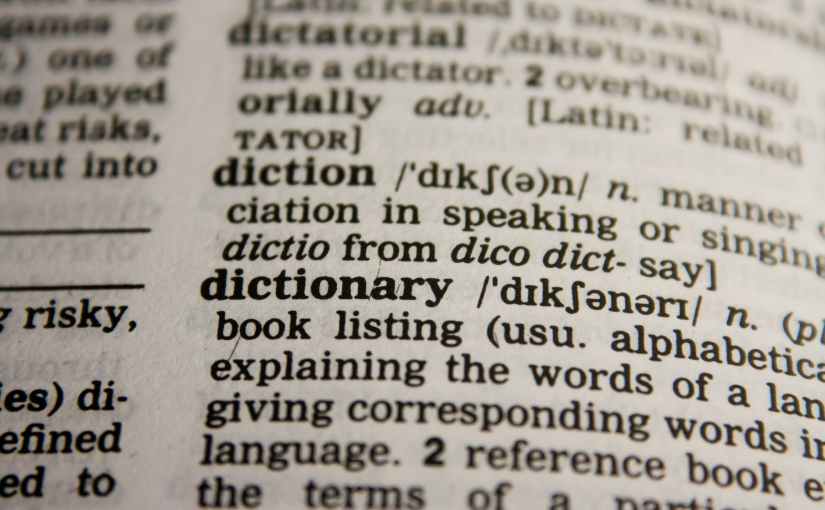
According to Webster, ‘drain’ means “to cause the gradual disappearance of”.

‘Disrupt’ means “to break apart”.

‘System’ means all sorts of things, but for these purposes we’ll say “a form of social, economic, or political organization or practice”.

And ‘swamp’ means “a difficult or troublesome situation or object”.

So Williamson’s message is basically suggesting we break apart the big daddy of social, economic, political practices and/or organizations. (AKA: the government.)

Trump’s message says to destroy a difficult and troublesome situation/object. (AKA: the government).

Call me crazy, but semantically speaking, Williamson is onto something. If you can break something apart, you can reform it better. If you totally destroy something, there is nothing left to work with.

Semantics matter. Semantics, intention. It’s sort of everything.

Again, this isn’t meant to be political, and I’m not endorsing anyone or anything. I’m just explaining how I came to the conclusion that one set of words makes me feel a hell of a lot better than another set of words.

And I think that’s pretty damn swell.

My Month with Jane

Please note: This has nothing to do with Grace and Frankie or Jane’s latest cancer diagnosis and subsequent remission; this conversation organically, and very much at random, occurred one day while my mom was sitting on my couch. From there, I realized Jane was very much alive, well, and still in the news. It was also a great reminder that I need to watch Grace and Frankie.

Ok–so it’s currently the middle of January and I’ve had this very random, very hilarious idea. It has just occurred to me that Jane Fonda and her workouts were almost definitely a baby-sitter for me as a child. After my mom and I started talking about the workout videos, she pulled one of our favorites up on YouTube.

Jane Fonda’s New Workout from 1985 is still around for rollicking fun via Amazon, or you can watch it with interruptions on YouTube.

And you guessed it. I have decided to spend a month with Jane.

These tidbits of advice, the intonations, oh my goodness, I’m laughing so hard here. The vibrant colors! The teased hair! The half shirts, tight shorts, leg warmers! My mom and I remember this stuff VERBATIM. We are honestly quoting from the video!

The Plan: weekly workouts with Jane starting at the end of January/early February. A write-up about each half hour spent with her.

I’m terribly excited.

Week One

Not only did I have the muscle memory for the leaning, swaying and kicking, but the music was pumping through my head like it never left. My cats looked at me like I was insane.

I pretty much kept up with the short workout, which is amazing considering I’m fairly out of shape and 9,000 years old now. As a lanky 7 – 12 year old kid, I had struggled tagging along with these athletic geniuses. I definitely felt more secure and stable in my body as I hoe-downed, Rover’s Revenged and curled my tail up like a scorpion… At least something positive has come with 30+ additional years!

But I’m not going to lie–afterwards, I felt shaky as hell!

Week Two

Um, yeah. So while I only did that one workout last week with our dear Jane, it STAYED with me for about half a week. No kidding. My calves, my obliques, my arms even. My God, had she let me rest my arms at all? It was crazy. I couldn’t believe how sore I was.

This time when I sang along with Leslie Lilien (try googling her; she’s done an excellent job at hiding) and I “did it”, I was reminded of the exercises I didn’t like as a child; they’re still hard for me to do now. While, as a massage therapist, I can appreciate the use of tackling inner thigh strength as part of a whole-leg regimen, regular me keeps questioning in my head about Jane’s intentions.

I don’t need that muscle strengthened, that inner leg lift is an impossible task! Why the hell are we doing it? On both sides?! Jane, Jane, Jane. Shaking my damn head.

Overall, though, this exercise routine really is affecting my WHOLE body! I’m running in circles, squatting; I’m crunching and scrunching, popping every vertebrae of my C-spine for a warm-up.

But–what’s with that the calf stretch at the beginning of the session? My massage therapist brain is cringing. This body is far too cold to try and lengthen my achilles tendon and double-headed gastroc at this point in the workout. I’m afraid my legs are going to snap and that will be the end of me and Jane.

Body, warm up fast!

If I didn’t know the routine from years of practice as a chid, I wouldn’t be cued in enough about what to do. As someone who has a hard time following routines, even WITH instructions, this would generally be extremely frustrating.

However. This warm-up, aerobics and leg lifting is a part of my DNA so I could do it with my eyes shut. Luckily, terrycloth headbands are not a part of my DNA, but I’m not gonna lie–I do have a pair of black leg warmers at the ready.

Week Three

Ok — I totally missed this week. It was my birthday week and chaotic. Sorry, Jane.

Week Four

Can I tell you how much I’ve fallen in love with this workout? I’m not in pain afterwards at all like I first was, and man, I still dislike some of the things she’s doing with my inner thighs and lack of stamina is a real_thing, but like I said before: This workout is moving and strengthening so many different parts of my body that I feel SEEN and HEARD as an individual.

Good Lord, Jane. Thank you for seeing and hearing me.

Final Thoughts

There are soooo many workout videos available via streaming these days, it’s nice to know you can go back home and still get a full body workout. I have high hopes I will fit in some more of her workouts here in the near future. Maybe I can even conquer one of her hour long sessions?

Upon writing this post, I saw that other people had been doing Jane’s videos over the past few years or so and writing about it. It brings me endless joy to know that I’m not the only one out there who is, even after all this time, bringing Jane into my living room.
Continuing Ed Topics: Pain

This post wraps up the current series of continuing education, although I’m sure the next time I need to renew my license, I’ll have another series of the same.

Today’s topic is a great one, from a human perspective, from a bodywork perspective—pain

Pain is such a complicated and fascinating facet of existence. The word ‘pain’ is derived from Greek and means punishment or penalty. The continuing ed class I took was slightly dated–from 2013 I believe–so it goes without saying that the statistics from the class have since been updated. Yet, I assure you, the sentiment is going to be the same.

Here are the stats compiled for that 2013 class:

  • Pain is the number one reason why people go see doctors, and also the most common reason for seeking out alternative and complementary treatments.
  • In 2011, the Institute of Medicine reported that 100 million Americans reported chronic pain and that the price tag associated with said pain, annually, was $635,000,000. You know that price has just gone up.
  • 100 billion aspirin tablets are used annually in the world.
  • The shape and color of pain tablets significantly change the effectiveness of the drug.
  • Here’s a fun one to ponder: people over 60 tend to have less pain than those under 60.
  • Talk therapy and back therapy both help with back pain…statistically about the same.
  • Pain was considered a spiritual punishment prior to the 1600s. Only then did Rene Descartes attribute pain to tissue damage.

This model of tissue damage being the only source of pain creates a wall when chronic pain is compared to acute pain. With acute pain, you can usually point fingers to the source of the issue. When you remove the issue, pain theoretically goes away. 

Chronic pain usually doesn’t have a straight line connecting multiple dots. It typically has many lines creating a crazy pattern, thus making this type of pain unpredictable. Even if you remove all that seems to be causing the pain, the pain may not resolve. (This also makes me think of how you can cure something but not heal it, and vice versa.)

These facts lead to a rather large and looming factor about pain: Pain is an illusion. (But so is reality, right???)

I’m not sure about you, but this one sits sort of -eh- with me. But… as stated in the course packet for the class I took, “Tissue damage is not necessary or sufficient for pain.” 

From a personal bodywork perspective, I cannot tell you how many times–almost on a weekly basis–people will present with the same feel of the tissue. It could be a tightness, a knot, a collection of aggravated muscles–but one client will be miserable and the other one will tell me s/he feels great.

You know how much I love the brain. A client and I were just talking about the pain impulse coming only from the brain and not from the tissue or affected area at all. What then? (Ok, we know this can’t be the only way, just like the other way isn’t conclusive, either.)

There’s a study from 2004 (Derbyshire) that states “Brainwave patterns in people who think they are receiving painful stimulus but aren’t are almost identical to brainwaves of people actually receiving painful stimulus”.

The plot thickens…

We’ve all heard about phantom limb pain… again… our friend, the brain.

Under this umbrella, it kind of does look like the brain is causing the pains and not the other way around! It’s receiving the sensory input from the affected area, but depending on context, the person receiving it, memory, cellular memory… only then does the brain decide whether or not the sensory input painful.

Here’s the thing. And I’m not going to go into the particular population that likes pain–that’s another topic–but for the most part, we don’t like pain. We stray away from it. We do things to keep ourselves from being in pain.

Pain often alerts us when something is WRONG and needs attention. It keeps us from making more damage by asking us to change our behavior (like touching something hot). It can activate healing by encouraging us to get care (massages, chiropractic, etc). 

But. Pain can stop being of use when it’s no longer necessary for those responses.

According to this class, it’s believed that that brain processes pain like an emotion. Whether or not something reads as good or bad is an emotional assessment. Apparently brain studies have suggested that the midbrain is affected when something is painful, much like an emotion affects the midbrain. Pain can also be activated by the upper brain–for instance, if anxiety is an issue, pain can be perceived as worse.

The point of the class, I think, is that by observation or learning about pain, pain can be changed. There are studies suggesting that those who are invested in studying pain have less of it. If you can understand where it is coming from, it can lose its hold on you (whether or not you still feel it).

Of course, there’s the issue of chronic pain leading to brain conditions like depression, hypochondria, aforementioned anxiety, lack of sleep, cognitive impairment among others… which of course… can make pain worse.

It’s a slippery slope. I think the best way to deal with pain from a bodyworker’s perspective is honestly just to be attentive to the needs of the client. Offer validation by listening to the client and then palpating the affected area. Hopefully the combination of hearing the client as well as actively working the tissue is enough to offer even a tiny part of relief as part of a whole care regimen.

Thoughts about your own pain?

In Closing

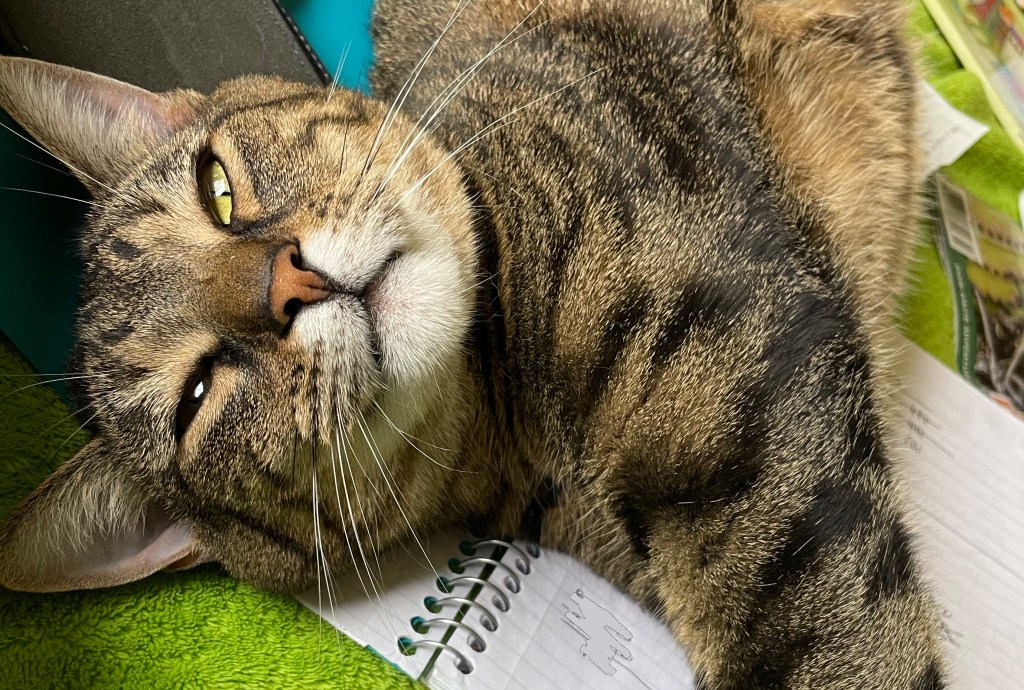
Interestingly enough, when I typed in pain to find an image suitable for this post, the first images were all of emotional pain! And because of this emotional pain, these people were tightened into balls…which restricts movement..which can cause physical pain!

I’ve also purchased additional textbooks on the matter, so don’t be surprised if I talk about this fascinating topic again.

Thanks for reading!

Continuing Ed Topics: Brain Waves

Oh, you know I had to go there. I love the brain; it fascinates me like you wouldn’t believe. I’ve said it before, and I’ll say it again–bet I was a neuroscientist in a past life!

So let’s talk about the lovely placenta-looking mass (yes, as gross as it seems, you know I’m speaking the truth) that resides in our head. It operates in different brain wave types — you’ve got beta, alpha, theta, and delta.

Delta is the slowest frequency; this is where we are having dreamless sleep, or perhaps deep meditation. This is where the body heals at a cellular level. Theta moves faster, and is where we are asleep or deeply relaxed, but vivid imagery can come into play. Alpha is still faster, but the person can be calm and relaxed while still attentive to the outside world.

Now let’s bring this back to bodywork.

Beta is what is present when a client appears for the session. The fastest mover and shaker of the brain waves, these beta waves will express your client as excited, perhaps even tense. Through bodywork, the goal is to achieve a slower oscillation of the brain’s impulses.

What if the client (or you) speaks during the entirety of the session? Here’s the thing. Plenty of people love to talk during a session. Plenty of people never peep out a word. Sometimes someone will speak during their session; other times this same person will fall asleep the very next time.

Regardless if the client is talking throughout the session, his/her body will still sink into alpha waves. This is why, for the most part, whenever you leave a bodywork session, you’re going to walk away more relaxed than when you started. Even if you chatted the whole time, even if you had a hard time relaxing.

There are ways to try to induce slower brain waves in your client–and I think this is a really fascinating approach to bodywork. As a bodyworker, I tend to follow my client’s lead for the day and provide whatever they need/want in that moment.

But if a client is quiet, I think I’ll approach the next massage I give from a brain-perspective!

According to Erik Dalton in his article 1Give Your Bodywork a Brain Wave Boost, there are specific techniques that can help induce these states. (And even if you yourself aren’t a bodyworker, you could always ask a friend or partner to try these techniques on you!)

  • While the client is supine (face-up), use a slow, rhythmic breath as you massage their sub-occipital muscles (the short little buggers who lie just at the bottom of your head).
  • Use slow, lower back techniques such as taking the elbow to strip across the lowest part of the back at the hip line while the other hand is placed on the opposite side of the back.
  • Push down on the top of the sacrum while sliding/gliding the forearm gently up the spine

I think adding a spinal flush (which is little friction circles along the spine, but not just a massage technique but also an energetic one) would be a nice touch as well.

Dalton also suggests using talk to let a client know that their muscles are relaxing. (I think I have a tendency of sharing this anyhow.) He also will help direct his client to breathe more slowly, by either verbal encouragement or “shadowing” the client’s breathing to help slow it down.

By simultaneously stimulating proprioception through tactile stimuli and interoception (awareness of their internal sensation) through cueing, the client is able to embody a healthier, deeper brain wave state. The moment a client is touched brainwaves begin to change.

2Dalton, Erik

Ahhhh, the amazing power of touch!

1,2 Information taken from July/August 2022 edition of Associated Bodywork & Massage Professionals magazine.

Continuing Ed Topics: Emotions

This next blog post in regards to continuing education topics is broader than the first topic. Not only does it relate to massage therapists as practitioners, it also relates to the human condition at large.

The big question is: are emotions contagious?

In short, the answer is yes. While, yes, we are spirits inhabiting a body as experience, it’s safe to say that our brain is also always creating an emotion during the experience. ANY experience. ALL experiences.

A point made during the course was that even being rational is considered an emotion. Upon researching the lovely web, I found that ‘rational’ is actually considered a category for emotions. Some emotions are rational, some are irrational. I’m not sure how that can even be because things become rational or irrational due to judgment, and judgment is usually formed because of an emotion…

I digress.

The class teaches that we are never not without emotion, and that emotion is what drives us for thought or movement. Emotions are what keep us alive; they’re used as signals for other animals. Threat oftentimes drives emotions.

Braintively speaking (see what I did there?), emotions are tied to the parasympathetic nervous system (rest and digest) as well as the sympathetic nervous system (fight or flight).

Apparently there was this terrible study where the sympathetic nervous systems were severed in cats to see how they responded to stimuli. The study was trying to prove that organs and/or the sympathetic nervous system generated emotion… However, these poor kitties still had emotion even with it being severed.

There was another study of when epinephrine was given to human subjects to see if the epinephrine caused an emotional response. Nope. Picking up on emotions of others in the room is what caused an emotion in the subjects, not the hormone.

According to a Psychology Today article in 2010, emotions were considered cognitive appraisal and body perception. It stated that not only were emotions contagious, but so were behaviors. I think we all have personal experiences with both.

Why does this matter to massage therapists? So much is communicated through touch. I think people come to see us not just because of how much we can retrain muscle tissue or neural impulses to help them relax, but also because, as calming practitioners, our clients literally catch the emotion we are emitting, like a signal.

You can read my first post about continuing education topics here.