Small Moves, Better Days: Practical Ways to Support Daily Health

Image: Pexels

By Guest Blogger Bella Reilly

Everyday well-being isn’t built on grand overhauls; it grows from steady, repeatable choices that fit naturally into real life. When routines feel manageable, they’re more likely to stick—and that’s where meaningful change begins. The ideas below focus on simple strategies that quietly improve how you feel, think, and function day to day.

Quick Takeaways 

  • Small habits compound faster than occasional big efforts.
  • Movement, rest, and mental engagement work best when they’re consistent.
  • Organization reduces stress just as much as nutrition or exercise.
  • Learning and self-care can be practical, not indulgent.
  • Support systems and tools make healthy choices easier to maintain.

Gentle Habits That Anchor the Day

Daily well-being often hinges on rhythm. Waking up at roughly the same time, getting a few minutes of natural light, and eating regular meals help stabilize energy and mood. Hydration is another quiet lever; keeping a water bottle nearby tends to improve focus and reduce afternoon fatigue. These habits aren’t flashy, but they form the baseline that allows everything else to work better.

Keeping Health Information Organized and Accessible

Managing your health is easier when important documents aren’t scattered or forgotten. Digitizing records like lab results, prescriptions, and visit summaries allows quick reference during appointments or unexpected situations. Having a single, tidy digital folder often reduces anxiety because you know exactly where to look. Saving these files as PDFs helps preserve formatting and makes them easy to share across devices. Using tools for adding, reordering, deleting, or rotating pages keeps everything current without starting over. Learn more about guidelines for inserting pages into a PDF.

Moving the Body Without Making It a Chore

Movement doesn’t require a gym membership or a perfect plan. Walking during phone calls, stretching while waiting for coffee, or doing a brief mobility routine before bed all count. The goal is circulation and joint health, not exhaustion. Over time, these low-effort choices reduce stiffness, support cardiovascular health, and make more demanding activities feel less intimidating.

Learning as a Form of Mental Self-Care

Mental well-being thrives on curiosity and growth. Lifelong learning keeps the mind engaged, builds confidence, and creates a sense of forward motion that counters stagnation. Choosing a program aligned with your goals matters; for instance, someone focused on leadership or operations might explore bachelor in business administration programs to strengthen skills across accounting, communication, and management. Online degree options make this accessible, allowing learning to fit around work, family, and existing routines. 

Making Healthy Choices Stick

Consistency improves when decisions are made ahead of time and kept simple.

  • Choose one habit to focus on for two weeks.
  • Attach it to an existing routine, like mornings or evenings.
  • Keep the effort level intentionally low.
  • Track completion with a quick note or calendar check.
  • Adjust only after the habit feels automatic.

Comparing Everyday Wellness Supports

Different strategies serve different needs, and variety keeps routines flexible.

Focus AreaSimple ApproachEveryday Benefit
Physical energyShort walks or light stretchingBetter circulation and mood
Mental clarityLearning something new weeklyImproved confidence and focus
Stress reductionOrganized health informationLess anxiety during appointments
RecoveryBody-based relaxation practicesImproved sleep and calm

Integrating Bodywork Into Everyday Wellness

Stress often settles in the body before the mind notices it. Holistic services from Nani Lotus Bodywork, including therapeutic massage, reflexology, and Reiki, offer accessible ways to release tension and restore balance. These approaches support relaxation, circulation, and a sense of groundedness that complements everyday habits like movement and sleep. Exploring offerings from Nani Lotus Bodywork can help create a routine that nurtures both physical comfort and mental ease.

Practical Questions About Everyday Wellness Choices

If you’re weighing which steps to prioritize, these questions often come up when people move from interest to action.

How quickly can small health changes make a difference?
Some effects, like improved mood or energy, appear within days of consistent habits. Physical changes usually take longer, but momentum builds early. The key is noticing subtle improvements and letting them reinforce the routine.

Is it better to change multiple habits at once or one at a time?
Focusing on one habit at a time tends to work better for long-term consistency. Once it feels automatic, adding another becomes easier. This approach reduces overwhelm and decision fatigue.

Do digital tools really help with stress and health management?
Yes, especially when they reduce uncertainty. Having records and plans organized lowers cognitive load during already stressful moments. That mental relief often translates into better overall well-being.

How does learning impact mental health beyond career benefits?
Learning stimulates curiosity and provides a sense of progress. It can improve self-efficacy and reduce feelings of stagnation. These psychological benefits extend well beyond professional outcomes.

Are body-based therapies useful if I already exercise and eat well?
They complement those habits by supporting recovery and relaxation. Exercise builds strength, while bodywork helps release accumulated tension. Together, they create a more balanced approach to wellness.

Closing Thoughts

Everyday health is less about perfection and more about alignment. When habits fit your life, they become sustainable rather than stressful. By combining simple routines, organized information, ongoing learning, and intentional self-care, well-being becomes something you live—not something you chase. Small moves, repeated daily, quietly shape better days.

Bella Reilly knows the wellness struggle. For years she bounced from fad diet to trendy wellness treatment, back and forth and back and forth, leaving both her and her bank account feeling depleted. Eventually, she had to say, enough is enough. She began carefully researching wellness trends to find the best, most affordable options for her. At Well Now Shop, she shares some of the tips and advice she has gathered from her ongoing wellness research

No A.I. was used in crafting this article.
Sustainable Ambition: Balancing Well-Being and Momentum When Starting a Side Hustle

By Guest Blogger Zack Spring

Starting a side hustle is an act of optimism, you’re building something of your own. But the excitement of creation can quickly slide into exhaustion. The hardest part isn’t starting, it’s sustaining your pace without sacrificing yourself along the way.

Key Takeaways

  • Burnout prevention is business infrastructure, not indulgence.
  • Energy management and structure outperform raw effort.
  • Outsourcing administrative chaos accelerates clarity.
  • Recovery must be systematized, not improvised.
  • Momentum thrives on rhythm, not relentlessness.

When Drive Turns into Drain

In the first months, your ambition fuels every late night. But eventually, that same drive can turn toxic if it’s not managed. Burnout often arrives disguised as productivity—it feels like progress until you crash.

The truth: consistent energy, not endless effort, builds lasting results. Learn to notice the early warnings: fatigue that no caffeine fixes, irritability during simple tasks, or that subtle resentment toward your own project. That’s not a weakness. It’s a sign your system needs recalibration.

Replace Hustle with Systems

You can’t outwork chaos. Systems replace the daily scramble with a predictable flow, freeing your brain to focus on what matters.

ChallengeReplace WithResult
Endless micro-decisionsWeekly focus frameworkFewer cognitive drains
Overwork cyclesStructured task windowsSustainable output
Admin overloadAutomated tools or templatesTime reclaimed for strategy
Constant mental clutterProcess documentationMental clarity restored

Structure is not restriction, it’s self-respect. It ensures your creativity survives the operational grind.

Reducing Friction Through Smart Delegation

The early stage of a side hustle is fertile ground for overwhelm: business registration, tax setup, compliance, branding. But not everything needs your personal bandwidth. Platforms like ZenBusiness streamline formation, legal filings, and administrative tasks so you can focus on the work that generates value.

Outsourcing complexity is not laziness, it’s optimization. By freeing up mental energy, you shift from being a task executor to a strategic founder. The goal isn’t doing more, it’s doing only what moves the needle.

Energy Protection Protocol: How to Stay Centered

Before you build momentum, you need to protect the foundation: your physical, emotional, and cognitive energy. Think of this as operational hygiene for your mind.

This isn’t about slowing down, it’s about ensuring that your energy is renewable. Without maintenance, every hustle eventually burns through its fuel source: you.

Build Momentum That Doesn’t Break You

Once your energy system is stable, growth becomes a matter of direction and leverage. Building sustainable momentum is less about grinding harder and more about compounding smartly.

  • Prioritize leverage tasks, projects that create recurring benefit (content, automation, partnerships).
  • Establish weekly review rituals to identify what’s actually producing returns.
  • Set quarterly goals, not daily to-do lists, to zoom out and stay strategic.
  • Limit the number of concurrent priorities to three; momentum dies in diffusion.
  • Create checkpoints for celebration; acknowledging progress sustains motivation.

Momentum, when built correctly, feels steady, not frantic. It’s forward motion powered by clarity, not caffeine.

Frequently Asked Questions

1. When should I outsource versus learn it myself?
If a task repeats and doesn’t teach you something new, outsource it. Founders often mistake self-sufficiency for efficiency, but learning everything slows growth. Hire or automate anything that doesn’t build your core skill advantage.

2. How do I know if burnout or misalignment is the issue?
Burnout feels like exhaustion without clarity; misalignment feels like resistance even when rested. The fix differs; rest restores the first, refocus cures the second. If you’re recharged but still resentful, it’s not your energy, it’s your direction.

3. What should I invest in first: marketing or systems?
Always systems. Marketing multiplies whatever foundation you have, so if your operations are disorganized, amplification only magnifies inefficiency. Build a scalable base, then invite attention.

4. How do I communicate boundaries with clients or collaborators?
Clarity earns respect. Set expectations at the beginning of every project: availability hours, response times, and deliverable timelines. Boundaries are invisible contracts; when you uphold them, others trust you more, not less.

5. When is it safe to leave my full-time job?
Leave when your side income covers both living costs and recovery capacity. If you can’t sustain your current quality of life with time left for rest, you’ll replace one burnout source with another. A smooth transition is strategic, not timid.

6. What’s the biggest mental shift needed to scale?
Stop identifying as a worker and start thinking like a system architect. Workers optimize hours; architects optimize flow. The moment you treat your hustle like infrastructure, your time becomes a multiplier, not a limitation.

Conclusion

Sustaining a side hustle is a design problem disguised as a discipline problem. Self-care isn’t the opposite of growth, it’s the engine that powers it. By protecting your energy, delegating intelligently, and structuring your momentum, you build something more than a business, you build endurance. True success is measured not by output but by how whole you remain when success finally arrives.

Zack Spring works as a tech consultant, which requires him to travel frequently. He also enjoys running and cycling, staying as active as possible. He created TravelFit.info to encourage his readers to stay active while traveling.

No A.I. was used in crafting this article.
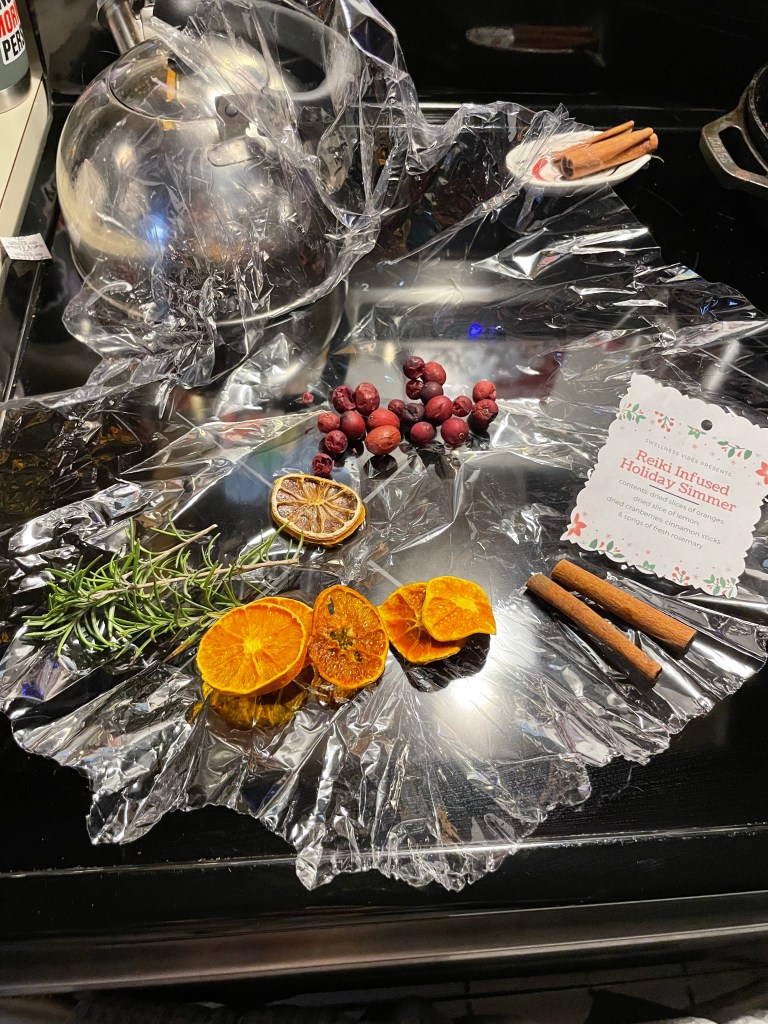
Reiki Infused Holiday Simmer

It’s recipe time!

I will be selling these at my bodywork location over the holidays, but you can also make or tweak your own. Now, I have an old dehydrator that was created with dried fruit in mind, but you could also try to dry out your pieces via a stove, at about 200 degrees, for 3+ hours.

My recipe includes:

fresh rosemary sprigs; dried cranberries; dried lemons; dried oranges (like mandarins or halos); cinnamon sticks.

Things you can add in: cloves, cardamom, other fruits and spices you find pleasing.

Spices & Everything Nices

To use:

Put ingredients into a pot of water on your stove. Boil to start, then set to simmer. Add water when it gets low. Don’t burn your house down!!! Don’t leave it unattended, and don’t leave it on overnight.

Enjoy. Find immense happiness with the way your house smells.

Created with lots of love, and Reiki infused throughout the entire process!

Ready to Rumble!

Breathe Easy: Real-World Ways to Manage Everyday Stress

Photo by Freepik

By Guest Blogger Julia Merrill

We live in a time where your smartwatch can track your pulse — but not your peace. The truth? Everyone’s stressed. From running late to handling constant notifications, calm feels like an endangered species. Still, it’s entirely possible to reclaim your mental balance — even in chaos.


TL;DR

  • Stress is normal. Constant stress isn’t.
  • You can re-train your body to chill faster.
  • Small daily habits compound into real peace.

How to Reset in 60 Seconds

When you feel tension rising, here’s a micro-method that works:

  1. Pause — put both feet on the floor.
  2. Name the feeling. (“I’m overwhelmed.”)
  3. Exhale longer than you inhale.
  4. Do one grounding thing — refill water, stretch, or open a window.

Apps like Calm can walk you through breathing or short mindfulness breaks if you need structure.

The goal isn’t to feel perfect — it’s to feel present.


The Everyday Stress Checklist

  • Drink water before coffee
  • Get 10 minutes of daylight
  • Move every two hours
  • Say no once today
  • End the day with zero screens for 30 minutes
  • Laugh at something dumb (seriously)
  • Stretch before bed

If you want accountability, try using a free reminder app like Todoist — not for productivity, but to keep calm intentionally.


FAQ

Q: Is stress always bad?
No. It sharpens focus in short bursts. It only hurts when it’s constant.

Q: How can I calm down instantly?
Box breathing: in 4 seconds → hold 4 → out 4 → hold 4. Or go for a 5-minute walk. FitOn has free, quick movement routines that help reset energy fast.

Q: What if I can’t relax even on weekends?
That’s a sign of emotional carryover — your mind’s still “on the clock.” Try journaling or guided relaxation from Insight Timer before bed.


Common Stressors and Real Fixes

Stress TriggerQuick ResetOngoing Habit
Work overloadTake a short walkBlock 10 minutes between meetings
Negative newsMute alertsCheck the news once daily
Sleep debtNap for 20 minKeep a steady bedtime
Money worriesBreathe before budgetingUse apps like YNAB or Mint for visibility
LonelinessText someonePlan one call or meetup a week

When a Career Change Is the Calm You Need

Sometimes, no breathing trick fixes the real issue — because it’s not about stress management, it’s about the stress source.

If your job constantly leaves you drained, the most powerful thing you can do isn’t another meditation. It’s creating a new environment altogether. Starting your own venture can turn burnout into autonomy, giving you back your time, your energy, and your sense of direction.

Tools like ZenBusiness make the logistics of launching simpler — handling the paperwork so you can focus on what actually calms you: building something that fits your life.

The cure for endless stress isn’t tougher skin, it’s a truer setup.


Small Grounding Boosts You Can Try

Keep a tactile fidget like the Calm Strips sticker nearby — it helps you refocus quietly during tense moments. Or if you prefer audio grounding, try a “brown noise” loop on Spotify to create instant calm in noisy environments.


Quick Bullet Reminders for Sanity

  • Stretch while your coffee brews
  • Mute one notification group permanently
  • Take 3 deep breaths before answering a stressful email
  • Keep your phone out of your bedroom
  • Treat relaxation as maintenance, not indulgence

Conclusion

Stress will visit — that’s life. But peace comes from how you greet it. Whether you’re breathing deeper, walking more, or walking away from what no longer fits, calm isn’t a luxury. It’s strategy.


Julia Merrill is a retired board certified nurse practitioner. In her many years in the medical field, she experienced challenges that a lot of her patients came across when dealing with their medical care. She made it her goal to bridge the gap between those who receive care and those who provide it. One of the biggest things she learned was that doctors are human. They may not always know the answers to what is ailing their patients. She believes this is why it is so important for patients to be concise, honest, and organized when seeking treatment.

Ms. Merrill shares tips she has developed to help patients be their own advocate in seeking medical care, dealing with insurance companies, and how to contribute to their own health and well-being. Her advice? Befriend your doc! Visit her on the web at https://befriendyourdoc.org.

No A.I. was used in crafting this article.

The First Step Is the Hardest: How to Actually Start a Fitness Routine That Sticks

Photo via Pexels

By Guest Blogger Zack Spring

You’ve likely said it before: “I’ll start Monday.” That looming, mythical Monday has become a rite of passage for anyone dreaming of a healthier lifestyle but struggling to find the motivation. Starting a fitness routine can feel like standing at the bottom of a mountain, unsure of where to plant your first step. The problem isn’t just the physical challenge, it’s the mental resistance. If you want a routine that lasts longer than a few enthusiastic days, you need more than good intentions—you need a strategy that works for you.

Reframe Your Relationship With Movement

Instead of viewing exercise as punishment or a task to check off, think of it as a privilege and a gift you give yourself. Shifting your mindset from obligation to opportunity changes the emotional tone entirely. When you approach fitness with gratitude and curiosity, you’re more likely to keep showing up for it. This reframing helps you see movement not as something you have to do, but something you get to do, especially if your body is capable and your schedule allows.

Don’t Chase Hype—Define Your Own “Why”

Generic motivation won’t carry you far when life gets messy. You need a personal reason that grounds you when Netflix or takeout feels more tempting than sweating through lunges. Maybe it’s the energy you need to chase your kids around the yard. Maybe it’s avoiding the health issues that run in your family. Whatever your “why” is, make it specific, deeply personal, and emotionally resonant. That’s the anchor that keeps you in place when excuses start to flood your mind.

Track Your Progress

Tracking your wellness goals gives you a clear view of where you’re heading and how far you’ve come, making progress feel real instead of theoretical. Whether you’re aiming to hit a weekly workout target or simply drink more water, keeping a visual record helps set achievable benchmarks and makes it easier to hold yourself accountable. If you want to convert or tweak your file, this is a good option for compressing, editing, rotating, and reordering PDFs. Saving these goals as a PDF allows for consistent formatting across devices, easy sharing with a coach or accountability partner, and quick access when you need a reminder of what you’re working toward. 

Set Your Environment Up for a Yes

You are a product of your environment, whether you admit it or not. Leave your workout clothes out where you can see them. Keep your yoga mat unrolled in the corner of the room. Remove physical friction and cues that tempt avoidance. When your environment nudges you in the right direction without requiring willpower, motivation becomes a lot less elusive. And if you can pair that with reducing the friction of bad habits—like moving snacks off your desk—you create a physical space that supports your goals.

Make It Social, Even If You’re an Introvert

It’s hard to bail on a friend who’s waiting for you at the trailhead. Accountability doesn’t always require a running buddy, though. You can share your progress in a group chat, check in with a coach virtually, or post updates to a fitness app community. Humans are wired for connection, and leveraging that makes fitness feel less lonely and more communal. You don’t need to be the loudest in the room to be supported—you just need to stay visible to people who care if you show up.

Stop Tying Success to Appearance

You’ve been conditioned to believe that fitness should change how you look. But when your goals are appearance-based, you risk tying your motivation to something that changes slowly, unpredictably, and often according to factors outside your control. Focus instead on how you feel. Do you sleep better? Think more clearly? Have more patience? Fitness delivers mental and emotional gains far faster than visible abs, and recognizing that keeps the journey satisfying in the short term.

Build a Routine That Doesn’t Rely on Motivation

Motivation is a fleeting visitor; habits are the reliable neighbors who show up daily. Your routine shouldn’t hinge on whether you feel like working out. Instead, build cues, routines, and rewards that guide your behavior even on off days. Tie your workout to something consistent, like right after morning coffee or while dinner is baking. The less thinking and deciding you have to do, the more automatic the action becomes. Eventually, it won’t be a debate—it’ll just be what you do.

The path to a lasting fitness routine isn’t paved with perfect plans or peak motivation. It’s built on clarity, simplicity, and momentum. You don’t need a gym membership, a six-pack vision board, or the willpower of a Navy SEAL. You just need to show up today, however imperfectly, and keep showing up tomorrow. 

Zack Spring works as a tech consultant, which requires him to travel frequently. He also enjoys running and cycling, staying as active as possible. He created TravelFit.info to encourage his readers to stay active while traveling.

No A.I. was used in crafting this article.